
Zinc is needed in relatively small amounts, but it influences an extraordinary number of processes throughout the body.
This essential trace mineral supports immune function, DNA and protein synthesis, cell division, wound healing, growth, reproduction, taste perception, intestinal health, and communication between cells. Zinc is required for the activity of hundreds of enzymes, and most of the body’s zinc is stored in skeletal muscle and bone.
Because zinc participates in so many systems, low zinc status does not always produce one obvious symptom. A person may instead experience a collection of seemingly unrelated concerns, such as frequent infections, slow wound healing, changes in taste, poor appetite, hair shedding, skin irritation, digestive problems, or reduced reproductive function.
However, these symptoms are not unique to zinc deficiency.
Hair loss may also be related to iron deficiency, thyroid dysfunction, hormonal changes, inadequate protein intake, autoimmune disease, recent illness, or stress. Frequent infections may reflect poor sleep, blood-sugar dysregulation, medication effects, chronic stress, or an underlying immune condition. Low libido can have hormonal, vascular, neurological, psychological, or medication-related causes.
For this reason, zinc should not be treated as a universal explanation for every symptom—or as a supplement that everyone should take indefinitely.
A responsible functional nutrition approach asks several important questions:
This guide explains the possible signs of zinc deficiency, common underlying causes, available testing methods, the importance of copper-to-zinc balance, the best dietary sources, and how to use zinc supplements safely.
Zinc is an essential mineral, meaning the body cannot manufacture it. It must be obtained regularly through food, fortified foods, or nutritional supplements.
Zinc can be understood as serving three broad roles in the body.
Hundreds of enzymes depend on zinc to complete essential chemical reactions. These reactions influence digestion, protein metabolism, antioxidant protection, cellular energy, tissue repair, and the production of important signaling molecules.
Zinc helps stabilize proteins, cellular membranes, and DNA-related structures. Zinc-containing proteins are involved in normal gene expression, cellular development, and communication between cells.
Zinc contributes to immune-cell activity, inflammatory regulation, hormone-related signaling, neurotransmission, apoptosis, or controlled cellular death, and the body’s response to physiological stress.
For these reasons, zinc is sometimes described as a “master conductor.” It does not perform every function by itself, but it helps coordinate numerous enzymes, proteins, hormones, immune cells, and signaling pathways.
The conductor analogy also explains why more zinc is not always better.
An orchestra does not improve by adding twenty extra trumpets while removing the other instruments. In the same way, taking large amounts of one isolated mineral for long periods can interfere with the balance of copper, iron, magnesium, and other essential nutrients.
Severe zinc deficiency is uncommon among generally healthy adults in the United States. However, inadequate or marginal zinc status may occur, particularly in people with restrictive diets, chronic digestive problems, alcohol overuse, increased physiological needs, or impaired absorption.
The signs depend on the severity and duration of deficiency, the person’s age, and whether other nutrient deficiencies are present.
The following symptoms may justify a closer evaluation, especially when several occur together.
Zinc supports both innate and adaptive immunity.
Innate immunity is the body’s rapid, first-line defense against potential threats. Adaptive immunity develops more specific and targeted responses. Zinc is involved in the development, maturation, communication, and activity of multiple immune-cell types.
Inadequate zinc may impair immune regulation and increase vulnerability to infection. Older adults, people with malabsorption, and individuals consuming nutrient-poor diets may be especially susceptible.
This does not mean that zinc supplements prevent every cold or infection. Evidence concerning zinc lozenges and the common cold remains mixed. Certain oral zinc products started soon after symptoms develop may modestly shorten the duration of a cold, but they do not reliably prevent colds, and results depend on the formulation, dose, and timing. (Office of Dietary Supplements)
When someone experiences frequent infections, zinc may be one factor to evaluate. Other considerations include vitamin D status, protein intake, sleep quality, stress, blood sugar, medication use, allergies, and underlying immune disorders.
Zinc contributes to many stages of wound repair, including:
Severe deficiency can delay wound healing. However, taking more zinc does not necessarily accelerate healing when zinc status is already adequate.
Wound healing also depends on circulation, blood-sugar control, protein intake, vitamin C, hydration, infection control, pressure reduction, and appropriate wound care.
A persistent or nonhealing wound should receive medical evaluation. Zinc should not replace diabetes management, vascular assessment, infection treatment, or professional wound care.
Zinc is involved in normal taste perception. More significant zinc deficiency may contribute to:
Changes in taste or smell can also result from:
Therefore, a reduced sense of taste does not prove that someone is zinc deficient.
A systematic review found that zinc supplementation may improve certain taste disorders, particularly in selected populations, but treatment response depends on the cause of the taste disturbance and the individual’s baseline zinc status. (PubMed Central (PMC))
Reduced taste and smell can make food less enjoyable, which may decrease appetite.
Zinc deficiency itself has also been associated with poor appetite and weight loss in more significant cases. This can create a cycle:
Low zinc status → altered taste and reduced appetite → lower food intake → further reduction in zinc and protein intake
Older adults, people recovering from illness, and individuals following highly restrictive diets may be particularly vulnerable to this cycle.
However, unintentional weight loss should never automatically be attributed to zinc. It may be associated with gastrointestinal disease, thyroid dysfunction, depression, infection, diabetes, medication effects, cancer, or another significant condition.
Persistent or unexplained weight loss requires medical evaluation.
Zinc supports DNA synthesis, protein metabolism, cellular growth, and normal activity within hair follicles.
More significant zinc deficiency can be associated with alopecia or hair loss. In children, zinc deficiency may contribute to diarrhea, delayed growth, and alopecia. (Office of Dietary Supplements)
However, most hair loss is multifactorial.
A thorough evaluation may also consider:
Zinc replacement may be helpful when a true deficiency is present, but high-dose zinc is not an appropriate treatment for every form of hair loss.
Zinc supports epithelial tissues, antioxidant activity, immune regulation, and tissue repair.
More severe deficiency may cause dermatitis or skin lesions, particularly around body openings or on the hands and feet. Milder skin concerns are much less specific.
Acne, eczema, dry skin, rashes, and recurrent irritation may also be influenced by:
Zinc may deserve closer evaluation when skin concerns occur together with slow wound healing, frequent infections, reduced taste, hair loss, chronic diarrhea, or a diet low in zinc-rich foods.
The relationship between zinc and digestive health works in both directions.
Chronic diarrhea may increase zinc loss and decrease absorption. At the same time, inadequate zinc can affect the renewal and integrity of the intestinal lining.
Zinc helps regulate tight-junction proteins, which influence movement between intestinal epithelial cells. Laboratory studies demonstrate that intracellular zinc is important for maintaining intestinal barrier integrity. (PubMed)
A 2025 human study also suggested that orally administered zinc gluconate may reduce gastrointestinal barrier leakage under selected experimental conditions. This supports earlier laboratory and animal findings, but it does not mean that zinc is a universal treatment for “leaky gut.” (PubMed Central (PMC))
Persistent diarrhea requires evaluation for possible causes such as:
Zinc is involved in reproductive development and normal reproductive function.
In men, significant deficiency has been associated with reduced testosterone and impaired sexual maturation. A classic human study found that restricting dietary zinc in young men was associated with a substantial reduction in testosterone. In the same study, supplementing marginally zinc-deficient older men increased serum testosterone. (PubMed)
A later review concluded that the effect of zinc on testosterone appears to depend on baseline zinc status, baseline testosterone, dose, formulation, and duration. (PubMed)
This does not mean zinc acts as a testosterone booster in everyone.
When zinc status is already adequate, taking more may not increase testosterone and could eventually create mineral imbalances.
Low libido or low testosterone may also be related to:
Zinc can be included in an evaluation, but it should not replace appropriate hormone testing or medical assessment.
Fatigue and cognitive complaints are not specific to zinc deficiency.
However, zinc participates in cellular metabolism, neurotransmission, antioxidant defense, protein synthesis, and immune regulation. Inadequate zinc could contribute to reduced resilience, particularly when combined with poor nutrition, chronic illness, or other deficiencies.
Before attributing fatigue to zinc, it is important to consider more common causes, including:
Zinc may be part of the picture, but it is rarely the only factor.
Zinc is especially important during periods of rapid growth, including:
Significant zinc deficiency in children can contribute to impaired growth, delayed sexual maturation, reduced appetite, diarrhea, alopecia, and impaired immune function. (Office of Dietary Supplements)
Children should not be given adult zinc supplements without professional guidance.
Their daily requirements and safe upper limits are much lower than those of adults. Excessive zinc may cause gastrointestinal symptoms, copper deficiency, and other complications.
Concerns about growth, development, appetite, or recurrent illness should be evaluated by a pediatrician or another appropriately qualified healthcare professional.
Low zinc status does not always mean that someone simply failed to eat enough zinc.
A functional nutrition assessment considers five major factors:
People who eat very little meat, seafood, dairy, eggs, legumes, nuts, seeds, or fortified foods may not consistently meet their zinc requirements.
The adult Recommended Dietary Allowance is:
Adult men: 11 mg per day
Adult women: 8 mg per day
Pregnancy: 11 mg per day
Breastfeeding: 12 mg per day (Office of Dietary Supplements)
Requirements vary for infants, children, and adolescents.
A food diary can help determine whether low intake is likely. However, the total amount of zinc in food is only part of the picture. Bioavailability—the amount that can actually be absorbed—also matters.
Beans, lentils, nuts, seeds, and whole grains contain zinc, but they also contain phytate.
Phytate binds zinc in the digestive tract and can form an insoluble complex that reduces zinc absorption. Zinc from many plant foods is therefore less bioavailable than zinc from animal foods. (Office of Dietary Supplements)
This does not mean plant foods are unhealthy or that every vegetarian will become zinc deficient.
It means that people following predominantly plant-based diets may need to pay closer attention to:
Soaking, sprouting, fermenting, and leavening may reduce phytate in certain foods and improve mineral availability. The extent of the benefit varies according to the food and preparation method.
Plant-based sources include:
Conditions that interfere with digestion or absorption may increase the risk of low zinc.
Examples include:
In these situations, simply consuming more zinc may not fully correct the problem. The underlying digestive condition must also be evaluated and appropriately managed.
Zinc requirements increase during pregnancy and breastfeeding.
Children and adolescents also need adequate zinc to support growth and development.
Recovery from surgery, burns, significant infection, or another major physiological stress may alter nutrient needs. However, supplementation should be individualized rather than based on the assumption that every stressed or recovering patient needs high-dose zinc.
Alcohol can reduce intestinal zinc absorption, increase urinary zinc losses, and displace nutrient-dense foods from the diet.
The NIH identifies chronic alcohol use as a risk factor clinicians should consider when evaluating zinc status. (Office of Dietary Supplements)
Correcting zinc alone is unlikely to restore health if significant alcohol exposure, inadequate protein intake, liver dysfunction, or other nutrient deficiencies remain unaddressed.
Certain medications may affect zinc status or interact with zinc supplements.
Thiazide diuretics can increase urinary zinc excretion and reduce serum zinc concentrations.
Zinc supplements can also bind to quinolone and tetracycline antibiotics in the gastrointestinal tract, reducing the absorption of both the mineral and the medication. Penicillamine can also interact with zinc. (Office of Dietary Supplements)
A prescribed medication should never be stopped because of a suspected nutrient interaction.
Instead, discuss supplement timing, laboratory testing, and appropriate dosing with the prescribing clinician or pharmacist.
Serum zinc often decreases during infection, inflammation, or significant illness.
This occurs partly because zinc is redistributed between the blood and tissues during the acute-phase response. Therefore, a low blood zinc result during illness may reflect:
This is one reason zinc should not be interpreted from a single laboratory value without considering:
Zinc is involved in pancreatic beta-cell function, insulin synthesis, insulin storage, and insulin secretion.
People with type 2 diabetes commonly have lower zinc concentrations, and clinical trials have investigated zinc supplementation for glucose and metabolic outcomes. Some trials have shown improvement in fasting glucose, insulin resistance, triglycerides, or inflammatory markers, while others have produced conflicting results. The NIH concludes that the current evidence is insufficient to recommend zinc as a treatment for preventing or managing type 2 diabetes. (Office of Dietary Supplements)
From a functional perspective, zinc supplementation should not be used as a substitute for addressing:
There is no single perfect test for mild zinc deficiency.
Assessment is most useful when laboratory results are interpreted alongside symptoms, diet, medical history, medications, inflammation, and known risk factors.
Serum or plasma zinc is the most common clinical measurement.
In healthy people, concentrations commonly range from approximately 80 to 120 mcg/dL. NIH guidance states that serum zinc below approximately 70 mcg/dL in women or 74 mcg/dL in men may indicate inadequate status. (Office of Dietary Supplements)
However, serum and plasma zinc have important limitations.
Results can be affected by:
For follow-up testing, using similar fasting conditions and a similar time of day may make the results easier to compare.
Depending on the individual’s symptoms and health history, a broader evaluation may include:
These tests do not all directly measure zinc.
They may help distinguish a zinc-related concern from anemia, inflammation, thyroid dysfunction, protein deficiency, copper imbalance, or another condition with overlapping symptoms.
Hair mineral analysis may provide information about exposure or excretion patterns in selected situations, but hair zinc is not interchangeable with serum or plasma zinc.
Results may be influenced by:
Hair mineral analysis should not be used by itself to diagnose zinc deficiency or justify long-term high-dose supplementation.
A zinc taste test generally involves holding a liquid zinc solution in the mouth and describing whether the taste is:
Clinically, little or no taste is sometimes interpreted as possible low zinc status, while an immediate metallic taste is interpreted as more adequate zinc status.
However, research on the accuracy of the zinc taste test is mixed.
A published review concluded that the validity of the method has not been firmly established. Another study found a commercial taste kit unreliable for determining zinc status. Other research found a modest relationship between taste response and zinc intake in some male participants. (PubMed)
Taste perception can be affected by:
A zinc taste test may provide an additional clinical observation, but it is not a standardized diagnostic laboratory test.
Copper and zinc interact biologically and must remain in balance.
Both minerals contribute to:
The copper-to-zinc ratio is calculated as:
Serum copper ÷ serum zinc
The ratio can increase when:
Research has associated a higher copper-to-zinc ratio with inflammation, nutritional risk, oxidative stress, aging, and poorer outcomes in certain patient populations. One prospective study found that the plasma copper-to-zinc ratio correlated with inflammatory markers and albumin in older adults. (PubMed)
Another study in people with inflammatory bowel disease found that systemic inflammation influenced zinc and copper in opposite directions, contributing to an increased copper-to-zinc ratio. (PubMed Central (PMC))
However, the ratio is not specific to one disease.
It cannot independently diagnose:
Copper can rise during inflammation, while circulating zinc may fall. Therefore, an elevated ratio may reflect inflammatory physiology rather than a simple need to take zinc or reduce copper.
The ratio should be interpreted together with:
It is generally not appropriate to treat the ratio without understanding why it is abnormal.
The intestinal lining is made of rapidly renewing epithelial cells. These cells require adequate nutrition to divide, repair, and maintain the barrier between the intestinal contents and the bloodstream.
Zinc supports:
Laboratory and human research suggests that zinc can influence intestinal permeability and tight-junction function. (PubMed)
However, zinc is not a stand-alone treatment for every digestive complaint.
Someone with chronic bloating, reflux, diarrhea, constipation, abdominal pain, or food reactions may also need assessment for:
Correcting zinc may support the intestinal environment when deficiency is present, but the underlying cause still needs to be addressed.
Zinc contributes to reproductive health in both men and women.
In men, zinc is involved in:
In women, zinc contributes to:
However, reproductive symptoms are complex.
Low testosterone, infertility, irregular ovulation, low libido, or pregnancy complications should never be attributed to zinc alone. They may also involve thyroid function, insulin resistance, pituitary signaling, inflammation, stress, sleep, medication use, age, and many other factors.
Zinc is one of several nutrients involved in normal thyroid physiology.
It participates in:
However, thyroid function also depends on adequate:
Fatigue, hair loss, dry skin, weight changes, or low body temperature should not automatically be treated with zinc without a complete thyroid and nutritional evaluation.
Food should generally provide the foundation for zinc intake.
Zinc-rich foods also provide protein, amino acids, vitamins, fatty acids, and other minerals that support whole-body health.
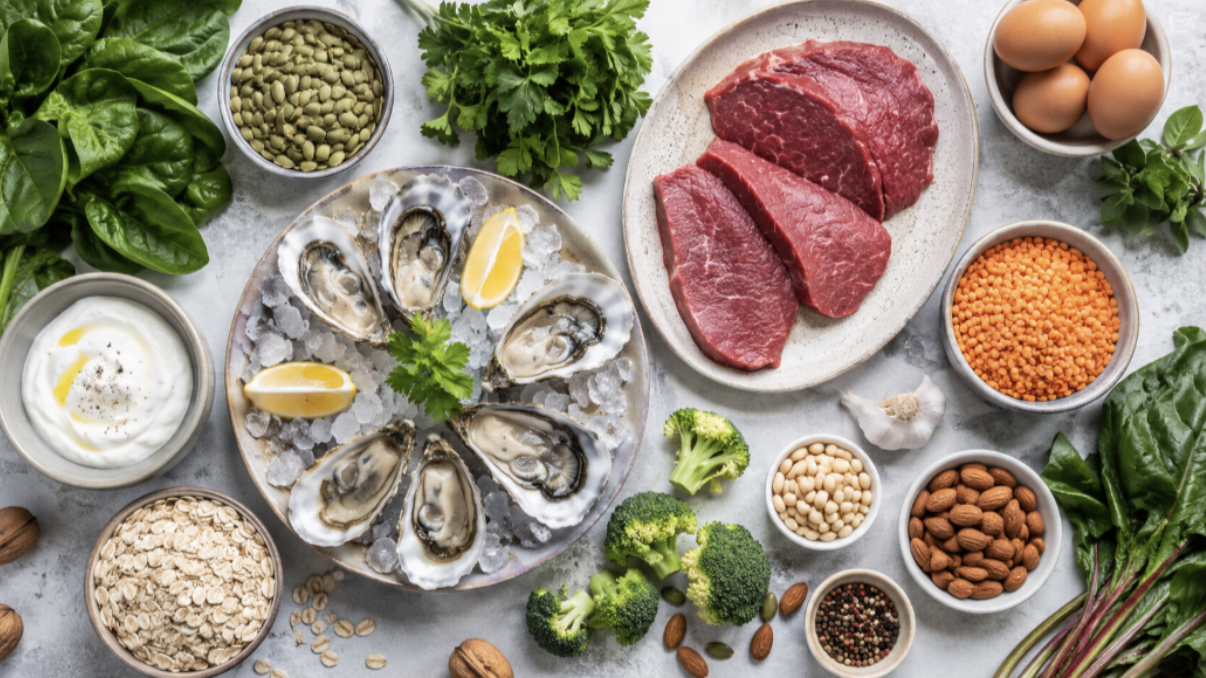
Oysters contain substantially more zinc per serving than most other foods. Meat, seafood, poultry, eggs, and dairy products are also useful sources. Plant foods such as beans, lentils, nuts, seeds, oats, and whole grains contain zinc, although their zinc may be less readily absorbed because phytates can bind zinc in the digestive tract. (Office of Dietary Supplements)
Eastern oysters, farmed and raw, 3 ounces:
Approximately 32 mg of zinc, or 291% of the Daily Value.
Pacific oysters, cooked, 3 ounces:
Approximately 28.2 mg of zinc, or 256% of the Daily Value.
Beef bottom sirloin, roasted, 3 ounces:
Approximately 3.8 mg of zinc, or 35% of the Daily Value.
Blue crab, cooked, 3 ounces:
Approximately 3.2 mg of zinc, or 29% of the Daily Value.
Breakfast cereal fortified with 25% of the Daily Value for zinc, 1 serving:
Approximately 2.8 mg of zinc, or 25% of the Daily Value.
Regular or quick oats, cooked with water, 1 cup:
Approximately 2.3 mg of zinc, or 21% of the Daily Value.
Roasted pumpkin seeds, 1 ounce:
Approximately 2.2 mg of zinc, or 20% of the Daily Value.
Pork center-loin chop, broiled, 3 ounces:
Approximately 1.9 mg of zinc, or 17% of the Daily Value.
Turkey breast, roasted, 3 ounces:
Approximately 1.5 mg of zinc, or 14% of the Daily Value.
Cheddar cheese, 1.5 ounces:
Approximately 1.5 mg of zinc, or 14% of the Daily Value.
Cooked shrimp, 3 ounces:
Approximately 1.4 mg of zinc, or 13% of the Daily Value.
Cooked lentils, ½ cup:
Approximately 1.3 mg of zinc, or 12% of the Daily Value.
Sardines canned in oil, drained with bones, 3 ounces:
Approximately 1.1 mg of zinc, or 10% of the Daily Value.
Plain Greek yogurt, 6 ounces:
Approximately 1 mg of zinc, or 9% of the Daily Value.
One-percent milk, 1 cup:
Approximately 1 mg of zinc, or 9% of the Daily Value.
Dry-roasted peanuts, 1 ounce:
Approximately 0.8 mg of zinc, or 7% of the Daily Value.
Cooked long-grain brown rice, ½ cup:
Approximately 0.7 mg of zinc, or 6% of the Daily Value.
One large egg:
Approximately 0.6 mg of zinc, or 5% of the Daily Value.
Canned kidney beans, ½ cup:
Approximately 0.6 mg of zinc, or 5% of the Daily Value.
Whole-wheat bread, 1 slice:
Approximately 0.6 mg of zinc, or 5% of the Daily Value.
Cooked salmon, 3 ounces:
Approximately 0.5 mg of zinc, or 5% of the Daily Value.
Cooked chopped broccoli, ½ cup:
Approximately 0.4 mg of zinc, or 4% of the Daily Value.
Cooked long-grain white rice, ½ cup:
Approximately 0.3 mg of zinc, or 3% of the Daily Value.
White bread, 1 slice:
Approximately 0.2 mg of zinc, or 2% of the Daily Value.
Raw cherry tomatoes, ½ cup:
Approximately 0.1 mg of zinc, or 1% of the Daily Value.
Raw blueberries, ½ cup:
Approximately 0.1 mg of zinc, or 1% of the Daily Value. (Office of Dietary Supplements)
The Daily Value for zinc is 11 mg for adults and children age four and older. Foods providing at least 20% of the Daily Value are considered high sources, although foods containing smaller amounts still contribute to a healthy diet. (Office of Dietary Supplements)
Oysters are extremely rich in zinc, but they are not required to meet daily zinc needs.
A balanced day could include:
People following vegetarian or vegan diets may benefit from including multiple zinc-containing plant foods daily rather than relying on only one source.
Soaking, sprouting, fermenting, and leavening may help reduce phytate and improve mineral availability in certain foods.
A zinc supplement may be appropriate when there is:
However, the dose, formulation, duration, and monitoring plan matter.
Supplement labels list the amount of elemental zinc, not the total weight of the zinc compound.
Common forms include:
NIH data indicate that absorption from zinc citrate and zinc gluconate is similar in young adults, while zinc oxide may be absorbed somewhat less efficiently. (Office of Dietary Supplements)
No formulation is ideal for every person. Gastrointestinal tolerance, elemental dose, other ingredients, and the reason for supplementation may be more important than marketing claims about a specific form.
The adult Tolerable Upper Intake Level is 40 mg per day from food and supplements combined, although higher doses may occasionally be used for a defined medical reason under professional supervision.
Taking 50 mg or more daily for several weeks can:
Long-term excessive zinc may cause copper-deficiency anemia and neurological symptoms.
A dose that may be reasonable for short-term correction is not automatically appropriate for long-term maintenance.
Zinc and copper compete for absorption.
Long-term use of high-dose isolated zinc may gradually produce copper deficiency. This is why people taking higher doses for more than a short period may need monitoring that includes:
Taking at least 25 mg of supplemental iron at the same time as zinc can also reduce zinc absorption. When both are required, a clinician may recommend separating them. (Office of Dietary Supplements)
Copper should not automatically be added to every zinc supplement. Some people already have elevated copper, inflammation, or other conditions that require individual interpretation.
Zinc may interact with certain medications.
Quinolone or tetracycline antibiotics are generally taken at least two hours before or four to six hours after a zinc supplement.
Penicillamine and zinc should generally be separated by at least one hour. (Office of Dietary Supplements)
Medication-specific instructions from the prescribing clinician or pharmacist should always take priority.
There is no universal timeline.
The time required depends on:
A short-term corrective plan may be reassessed after approximately four to eight weeks.
More significant deficiency or continued malabsorption may require a longer plan, but high-dose zinc should not continue for many months without monitoring.
Follow-up may include:
Once status improves, the goal is generally to transition toward food-based intake or a balanced lower-dose maintenance plan rather than continuing isolated high-dose zinc indefinitely.
A functional nutrition approach is not simply:
“You have a symptom, so take zinc.”
Instead, it considers the network of factors influencing zinc status.
One isolated symptom rarely confirms deficiency.
A cluster may be more informative—for example, reduced taste, low appetite, slow wound healing, frequent infections, chronic diarrhea, and very low intake of zinc-rich foods.
Important questions include:
A clinician may evaluate:
Serum zinc may be evaluated alongside copper, ceruloplasmin, CBC, CMP, albumin, CRP, ferritin, iron studies, thyroid markers, and other relevant tests.
The plan may involve:
Once zinc status improves, the goal is usually to maintain adequate intake through food or a balanced lower-dose nutritional plan.
Possibly.
Serum zinc has limitations and does not perfectly reflect total-body or tissue zinc status. However, symptoms alone are also unreliable.
A low-normal result may deserve closer interpretation when a patient has clear risk factors, but it does not automatically justify high-dose supplementation. Diet, inflammation, albumin, time of collection, copper status, and medical history should also be reviewed.
Yes. Zinc is required for normal immune function, and deficiency can impair immune-cell activity.
Correcting a deficiency may support immune health. Taking more and more zinc does not continuously make the immune system stronger. Excessive intake can actually suppress immune function and create copper deficiency. (Office of Dietary Supplements)
Zinc supports intestinal epithelial cells and tight-junction regulation.
Emerging human research suggests that zinc may improve selected measurements of gastrointestinal barrier function. However, zinc is not a cure for inflammatory bowel disease, celiac disease, chronic infection, food intolerance, or every condition described as “leaky gut.” (PubMed Central (PMC))
Zinc deficiency can contribute to low testosterone, and correcting a deficiency may improve testosterone in some men.
Taking additional zinc when zinc status is already adequate has not been shown to consistently raise testosterone. A man with low testosterone should receive a complete evaluation rather than assuming zinc is the only cause. (PubMed)
Yes.
One ounce of roasted pumpkin seeds contains approximately 2.2 mg of zinc, or about 20% of the Daily Value. (Office of Dietary Supplements)
Pumpkin seeds are a useful part of a balanced diet, although someone with significant deficiency may need multiple dietary sources or a professionally guided supplement plan.
Zinc replacement may help when hair loss is genuinely related to zinc deficiency.
However, zinc does not treat every cause of hair loss. Iron status, thyroid function, vitamin D, hormonal factors, protein intake, autoimmune disease, medication use, and recent physical stress may be equally or more important.
Excessive zinc may cause:
Over time, excessive intake may reduce copper absorption, contribute to anemia and neurological problems, lower HDL cholesterol, and impair immune function. (Office of Dietary Supplements)
Not necessarily.
The answer depends on:
A short course of moderate-dose zinc does not always require extra copper. Long-term or higher-dose zinc deserves closer monitoring.
Automatically adding copper may also be inappropriate when copper is already elevated.
The test may provide a clinical observation, but the evidence is mixed.
Taste can be affected by many factors unrelated to zinc. The test should not be used as proof of deficiency or as the only reason to prescribe long-term high-dose zinc. (PubMed)
Zinc is essential during pregnancy, and the adult pregnancy RDA is 11 mg per day.
However, pregnant patients should not begin high-dose zinc without consulting their obstetric or healthcare provider. Prenatal vitamins frequently already contain zinc, so total intake from all products should be reviewed. (Office of Dietary Supplements)
Zinc supports immune function, wound healing, taste, growth, reproductive health, intestinal tissues, protein synthesis, DNA-related activity, hormone signaling, and many other essential processes.
Possible symptoms of zinc deficiency include:
However, none of these symptoms is specific enough to diagnose zinc deficiency by itself.
A complete evaluation considers:
The goal is not to take as much zinc as possible.
The goal is to determine whether zinc is truly inadequate, understand why, correct it safely, and maintain a healthy balance among zinc, copper, iron, magnesium, and other nutrients.
At Iris Wellness Center, we use an individualized approach to nutrition and whole-body wellness.
Rather than recommending supplements based on one symptom, we review:
When appropriate, a functional nutrition plan may include food recommendations, targeted testing, short-term nutritional support, and regular reassessment to determine whether the plan should be continued, adjusted, or transitioned to maintenance.
Schedule a consultation with Iris Wellness Center to explore whether zinc status, mineral balance, digestive health, inflammation, blood-sugar regulation, or another underlying factor may be contributing to your symptoms.
This article is for educational purposes only and is not intended to diagnose, treat, cure, or prevent any disease.
Symptoms associated with zinc deficiency may also occur with many other medical conditions. Do not begin high-dose zinc, change your supplement plan, or discontinue prescribed medication without consulting a qualified healthcare professional.
Persistent symptoms, unexplained weight loss, nonhealing wounds, developmental concerns, severe diarrhea, or signs of significant illness require appropriate medical evaluation.

