
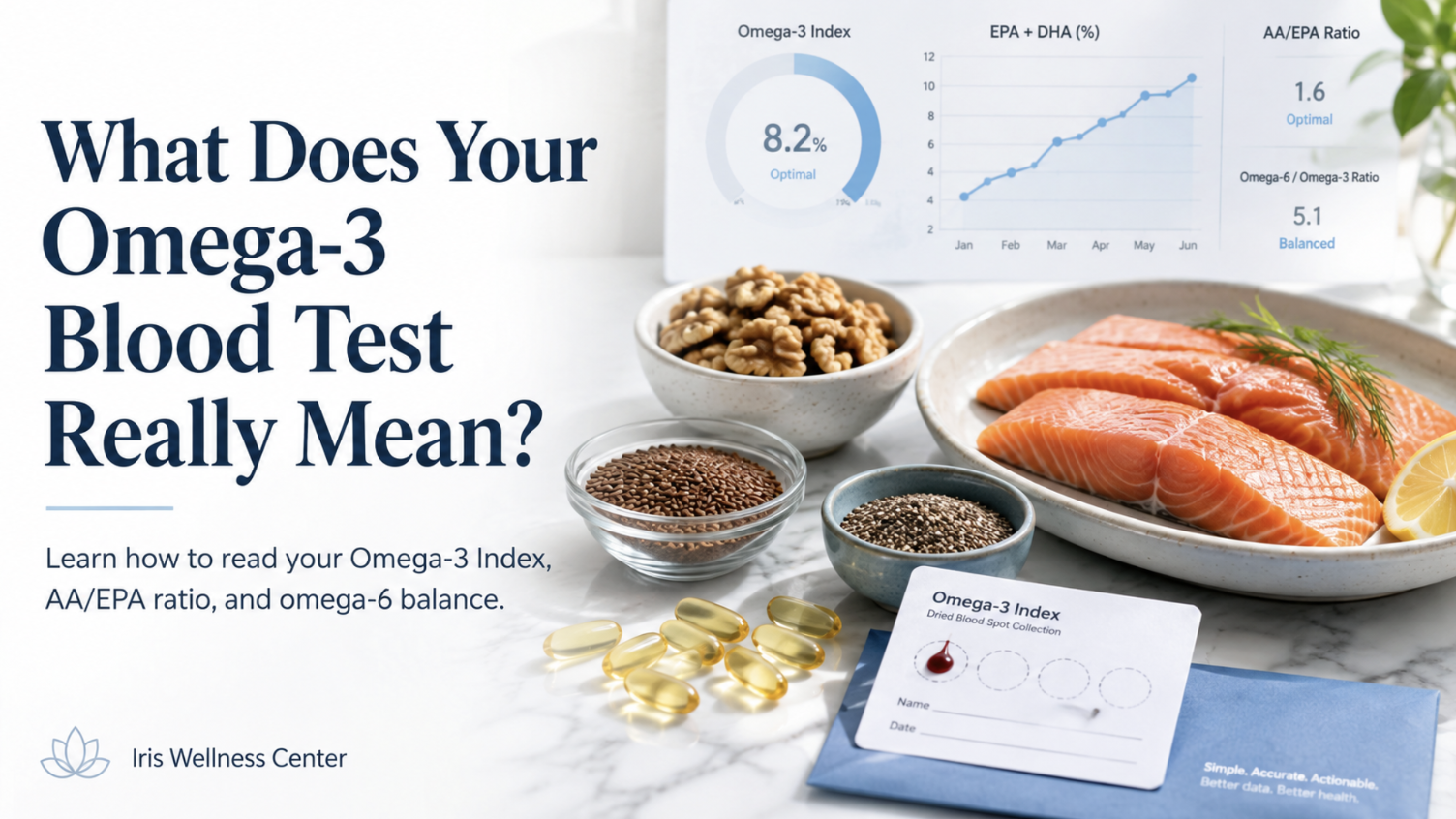
Omega-3 Blood Test Explained: Omega-3 Index, AA/EPA Ratio, and Omega-6/Omega-3 Balance
A practical guide to understanding your fatty-acid results - and why testing can be more useful than guessing.
Many people take fish oil, eat salmon, or add chia and flax to smoothies and assume their omega-3 status must be adequate. Yet two people can follow similar diets and produce very different blood results. Digestion, absorption, genetics, age, body size, medications, supplement formulation, dose, consistency, and the balance of other dietary fats can all influence how much EPA and DHA ultimately appear in the blood and cell membranes.
That is why an omega-3 blood test can be valuable. Instead of estimating intake from a food diary or supplement label, testing measures fatty acids in a blood sample. Depending on the panel, the report may include an Omega-3 Index, individual EPA and DHA values, an AA/EPA ratio, an omega-6/omega-3 ratio, and sometimes a trans-fat index or a broader profile of individual fatty acids.
These numbers should not be treated as a stand-alone diagnosis or a promise that changing one ratio will prevent disease. They are contextual biomarkers. Used together with symptoms, medical history, diet, medications, standard laboratory testing, and cardiovascular risk factors, they can help create a more personalized nutrition plan and provide an objective way to monitor whether that plan is working.
In-office testing in Houston
Iris Wellness Center offers convenient in-office omega-3 testing. Our team can help you obtain the sample, review the report in context, and build an individualized food and lifestyle plan. Contact the clinic before your visit to confirm the specific panel available and whether it is appropriate for you.
What Are Omega-3 Fatty Acids?
Omega-3 fatty acids are a family of polyunsaturated fats. The three most familiar forms are alpha-linolenic acid (ALA), eicosapentaenoic acid (EPA), and docosahexaenoic acid (DHA). ALA is found mainly in plant foods such as flaxseed, chia seeds, walnuts, soybeans, and certain vegetable oils. EPA and DHA are found most directly in fish, shellfish, fish oil, krill oil, and algae-derived products.
The body can convert some ALA into EPA and then DHA, but that conversion is limited and varies among individuals. For this reason, eating ALA-rich foods is nutritious but does not guarantee the same blood EPA and DHA levels as consuming marine or algal sources directly.
Fatty acids are not merely stored energy. They are structural components of cell membranes and help influence membrane flexibility, receptors, transport proteins, gene expression, and cell-to-cell signaling. DHA is highly concentrated in the brain and retina. EPA and DHA also serve as precursors for lipid mediators involved in regulating and resolving inflammatory responses. Omega-6 fatty acids are also essential and participate in both inflammatory and regulatory pathways. The goal is not to eliminate omega-6 fats; it is to understand the overall pattern and avoid oversimplifying a complex biological system.
Why Measure Omega-3 Instead of Only Tracking Intake?
A supplement label tells you what is in a capsule, not what reached your bloodstream or became incorporated into tissue. Even when the listed dose is accurate, results can be affected by whether the product is taken consistently, whether it is consumed with a fat-containing meal, the chemical form of the oil, digestive function, and individual metabolism.
Testing creates a baseline. If the result is lower than expected, you and your healthcare team can look for practical explanations instead of automatically escalating the dose. After a period of consistent changes, repeat testing can show whether the intervention actually changed the biomarker. This measure-modify-monitor approach is especially helpful for people who already take omega-3 supplements but do not know whether the dose is effective for them.
What Does an Omega-3 Blood Test Measure?
Not every omega-3 test is identical. Some panels use plasma or serum, which can be influenced more strongly by recent meals and short-term intake. Others assess red blood cell fatty acids, which provide a longer-term view because red blood cells circulate for approximately four months. Reports may also use different calculations, reference populations, and names. Always interpret the actual specimen type and the ranges printed on your report.
Marker
What it compares
What it can add
Omega-3 Index
EPA + DHA in red blood cell membranes
Longer-term EPA/DHA status
EPA and DHA
Individual fatty-acid percentages
Shows which component is driving the total
AA/EPA ratio
Arachidonic acid relative to EPA
Context for competing lipid-signaling substrates
Omega-6/omega-3 ratio
Total measured omega-6 relative to omega-3
Broad view of fatty-acid balance
1. The Omega-3 Index
The Omega-3 Index generally refers to EPA plus DHA expressed as a percentage of total fatty acids in red blood cell membranes. For example, an index of 6% means that EPA and DHA together account for about 6% of the measured fatty acids in those membranes. Because it uses red blood cells, the value reflects a longer window of intake and metabolism rather than only what you ate yesterday.
OmegaQuant commonly categorizes an Omega-3 Index below 4% as a higher-risk zone, 4% to 8% as an intermediate zone, and 8% or above as a desirable or lower-risk zone. These categories are widely used in omega-3 research and education, but they are not universal treatment thresholds adopted by every professional organization. A result should therefore be interpreted alongside the laboratory method, personal risk profile, and clinical goals.
Also confirm that your report is truly an Omega-3 Index. Some whole-blood panels report EPA + DPA + DHA rather than red-cell EPA + DHA. Those measurements are useful, but the percentages are not interchangeable. Comparing numbers from different laboratories without checking the specimen and calculation can lead to false conclusions.
2. EPA and DHA
A combined omega-3 score can improve while one component falls. DHA may rise because of frequent salmon intake or a DHA-dominant supplement, while EPA remains modest. Conversely, an EPA-focused product may raise EPA more strongly. Looking at the individual values helps explain why the total changed and whether the current food or supplement pattern matches the reason for testing.
DHA is especially important as a structural fat in neural and retinal tissue and is particularly relevant during pregnancy and early development. EPA participates prominently in pathways that generate less inflammatory eicosanoids and specialized pro-resolving mediators. This does not mean DHA is only for the brain or EPA is simply an anti-inflammatory drug. Their functions overlap, and the best balance depends on the individual.
3. The AA/EPA Ratio
The AA/EPA ratio compares arachidonic acid (AA), an omega-6 fatty acid, with EPA, an omega-3 fatty acid. Both are normal, biologically active fats. They can compete for some of the same enzymes and give rise to different signaling molecules. A higher ratio may result from higher AA, lower EPA, or both, so the ratio must be unpacked before recommendations are made.
Some functional and preventive-health educators use a practical AA/EPA target near 3:1. Other laboratories publish broader reference intervals, and scientific consensus has not established one universal ideal ratio for every population or condition. The most responsible use of the ratio is as a trend and contextual marker, not as a diagnosis of 'cellular inflammation.'
This distinction matters. If AA is already below the laboratory range and EPA is low, aggressively trying to reduce AA further may be inappropriate. The more logical question may be how to improve EPA while preserving an adequate supply of essential omega-6 fats. Always examine AA and EPA individually, not only the quotient.
4. The Omega-6/Omega-3 Ratio
The omega-6/omega-3 ratio compares the total measured omega-6 fatty acids with the total measured omega-3 fatty acids. It provides a broader view than AA/EPA, but it is also influenced by exactly which fatty acids the laboratory includes in each total.
A practical target near 3:1 is sometimes used in functional nutrition. However, laboratories and research groups use different ranges, and there is no single universally accepted clinical target. The ratio can improve by increasing omega-3, decreasing omega-6, or both. Those are not biologically equivalent strategies. Linoleic acid and arachidonic acid are essential, so the goal should not be to drive omega-6 intake as low as possible.
For many patients, the most useful pattern is to increase EPA- and DHA-rich foods while reducing heavily processed foods that displace nutrient-dense choices. The overall diet matters more than demonizing one cooking oil or one nutrient.
Why These Ratios Matter
Fatty-acid results provide information about the materials available to build cell membranes and generate signaling molecules. Membrane composition can influence flexibility, receptor behavior, transport across membranes, and intercellular communication. DHA is abundant in neural tissue and supports brain and retinal structure. EPA and DHA contribute to mediators involved in the resolution phase of inflammation, while omega-6 pathways produce both inflammatory and regulatory signals.
Researchers are also studying relationships between omega-3 status and cardiovascular health, cognitive aging, mood, pregnancy outcomes, retinal health, and other conditions. Association does not prove that raising a single biomarker will prevent or treat all of these problems. Large supplementation trials have produced mixed results depending on population, baseline diet, formulation, dose, and outcome. Testing is most useful when it guides an individualized plan rather than being used to market a universal supplement protocol.
What Does the Research Show?
Research on omega-3 status and omega-3 treatment needs careful interpretation because observational biomarker studies and randomized treatment trials answer different questions. A biomarker study asks whether people with higher blood levels tend to have different outcomes. A randomized trial asks whether giving a particular product, at a particular dose, to a particular population changes a defined outcome. The answers do not always match, and neither type of study proves that one over-the-counter supplement is appropriate for everyone.
Omega-3 Index and cardiovascular risk
The Omega-3 Index was proposed by Harris and von Schacky in 2004 as a potential risk marker for coronary heart disease mortality. Their review suggested that an index of 8% or higher was associated with the greatest cardioprotection, while an index below 4% was associated with greater risk. These cut points later became widely used for reporting and education, although they are not universal diagnostic thresholds.
In a 2018 analysis of approximately 2,500 adults from the Framingham Offspring Study who were free of known cardiovascular disease at baseline, higher red-blood-cell levels of long-chain omega-3 fatty acids were associated with lower risks of all-cause mortality and cardiovascular events during follow-up. This supports the Omega-3 Index as a potentially useful risk marker. However, it remains an observational association: people with higher levels may differ in diet, lifestyle, health status, or other factors that also influence outcomes.
A 2025 analysis of the Framingham Offspring Cohort reported that adding the Omega-3 Index to the pooled cohort risk equation modestly improved cardiovascular risk prediction. This is promising for risk refinement, but further validation and clinical implementation research are still needed before the marker can replace established cardiovascular assessment.
Why supplementation trials have produced mixed results
The VITAL randomized trial enrolled generally healthy older adults and tested 1 gram per day of marine omega-3 fatty acids for primary prevention. Supplementation did not significantly reduce the primary composite outcome of major cardiovascular events or invasive cancer compared with placebo. This result argues against presenting a standard-dose fish-oil capsule as a universal preventive treatment for the general population.
The REDUCE-IT trial studied a very different population: statin-treated patients with elevated triglycerides and established cardiovascular disease or diabetes plus additional risk factors. Participants received 4 grams per day of prescription icosapent ethyl, a purified EPA product. The trial reported a significant reduction in ischemic cardiovascular events. These results apply to a prescription medication used in selected high-risk patients; they should not be generalized to ordinary mixed EPA/DHA supplements.
In contrast, the STRENGTH trial tested 4 grams per day of a carboxylic-acid formulation containing both EPA and DHA in statin-treated, high-risk patients with atherogenic dyslipidemia. The trial was stopped early for futility and did not show a reduction in major cardiovascular events. Atrial fibrillation occurred more often in the omega-3 group. Differences among REDUCE-IT, STRENGTH, and other trials may involve formulation, population, achieved blood levels, comparator oils, and biological effects that are still debated.
What meta-analyses add
A 2021 meta-analysis of 38 randomized trials including more than 149,000 participants found modest reductions in several cardiovascular outcomes overall, with larger apparent benefits in trials of EPA alone than in trials combining EPA and DHA. The same analysis found an increased risk of atrial fibrillation, particularly with higher-dose therapy, and more total bleeding in EPA-only trials. This reinforces two practical messages: formulation matters, and higher-dose omega-3 therapy requires individualized risk-benefit review.
Research on the AA/EPA ratio
A 2019 review described the EPA/AA ratio as a potential marker of chronic inflammatory and thrombotic balance because EPA and AA compete for cyclooxygenase and lipoxygenase pathways. Much of this evidence comes from mechanistic research, observational cohorts, and secondary analyses rather than trials proving that treating to one specific ratio improves outcomes in every patient. For that reason, AA/EPA is best used as one contextual biomarker rather than a stand-alone diagnosis or universal treatment target.
Evidence-based takeaway
Higher omega-3 blood levels are associated with favorable outcomes in several cohorts, but supplement trials are not uniformly positive. Test results can help personalize nutrition; they do not justify unsupervised high-dose treatment or replace standard cardiovascular risk assessment.
How to Read Your Report Step by Step
Identify the specimen and calculation. Determine whether the panel uses red blood cells, whole blood, plasma, or serum, and whether the total is EPA + DHA or EPA + DPA + DHA.
Check the total omega-3 marker. Compare it with the range provided by that laboratory and with the goal selected by your healthcare professional.
Review EPA and DHA separately. A normal total can hide a low EPA or a pattern dominated by one fatty acid.
Interpret ratios with their components. For AA/EPA, look at AA and EPA. For omega-6/omega-3, look at both totals and the individual fatty acids when available.
Add clinical context. Consider triglycerides, LDL cholesterol, LDL particle number, ApoB, Lp(a), glucose, insulin, hs-CRP, blood pressure, diet, symptoms, medications, and family history.
Create a plan and retest. A repeat measurement after enough time has passed can reveal whether the plan changed the biomarker.
What Can Lower Omega-3 Status?
Rare or inconsistent intake of fatty fish, seafood, or algae-derived EPA/DHA.
Relying only on ALA from plant foods when conversion to EPA and DHA is limited.
A supplement that contains less EPA and DHA than expected per serving.
Taking omega-3 sporadically or discontinuing it frequently.
Digestive or absorption problems that require medical evaluation.
Differences in genetics, age, body weight, smoking status, and metabolism.
Comparing two tests that used different sample types or calculations.
How to Improve Omega-3 Levels Safely
Start with food
Fatty fish such as salmon, sardines, anchovies, herring, mackerel, and trout provide preformed EPA and DHA. The American Heart Association commonly encourages eating fish, particularly fatty fish, twice per week for people without established cardiovascular disease. Choose a variety of seafood and follow pregnancy-specific and local mercury advisories when relevant.
Plant foods such as chia, flax, walnuts, and soy provide ALA, fiber, minerals, and other valuable nutrients. They belong in a healthy diet, but they should not automatically be viewed as equivalent to a direct EPA/DHA source.
Choose supplements by EPA and DHA content
The number printed on the front of a bottle may refer to total fish oil, not the actual amount of EPA plus DHA. Read the Supplement Facts panel and calculate the daily EPA and DHA delivered by the number of capsules you take. Products also vary in oxidation control, purity testing, chemical form, and added ingredients.
More is not always better. High-dose omega-3 therapy may be appropriate in selected medical situations, but it should be supervised. Omega-3 supplements can interact with medications and may be unsuitable for some people. Individuals taking anticoagulants or antiplatelet drugs, those with bleeding disorders, people preparing for surgery, pregnant patients, and anyone with a history of atrial fibrillation or significant medical disease should consult an appropriate clinician before making major dose changes.
Give the plan time, then measure again
Red blood cell membranes change gradually. Many testing programs recommend repeating the Omega-3 Index after approximately three to four months of consistent intake. The appropriate interval depends on the test, clinical situation, and whether the intervention was dietary, supplemental, or both.
A personalized approach
At Iris Wellness Center, we can combine in-office omega-3 testing with a review of your food intake, supplements, symptoms, medications, and other laboratory findings. The goal is not simply to sell fish oil; it is to understand your starting point, choose a reasonable plan, and verify the response.
Who May Benefit From Omega-3 Testing?
Testing may be useful for people who want objective information about fatty-acid status, especially when the result will change a decision. Examples include individuals with low fish intake, those already taking omega-3 but unsure whether it is effective, patients reviewing cardiovascular or metabolic risk with their medical team, and people working on brain, eye, pregnancy, or healthy-aging nutrition.
It may also be helpful when standard cholesterol numbers and advanced markers appear discordant. For example, LDL cholesterol can improve while LDL particle number remains elevated. Omega-3 testing will not explain every lipid abnormality, but it can add another piece to a broader assessment that may include ApoB, Lp(a), triglycerides, insulin resistance, thyroid function, liver health, sleep, stress, genetics, and medication effects.
In-Office Omega-3 Testing at Iris Wellness Center
Iris Wellness Center offers in-office omega-3 testing for patients in Houston and the surrounding area. Testing can provide a baseline before making changes and can help monitor whether a nutrition or supplement plan is producing the intended result. Depending on the panel selected, the report may include the Omega-3 Index and additional fatty-acid markers.
During your review, we look beyond a single score. We consider EPA, DHA, relevant ratios, the laboratory method, diet, supplement use, symptoms, medical history, and other available laboratory findings. When a result requires medical diagnosis, medication management, or specialist evaluation, we encourage coordinated follow-up with the appropriate physician.
To ask about availability, preparation, pricing, and which test is most appropriate, contact Iris Wellness Center at (832) 975-7045 or visit iriswellness.center. Testing services and interpretation do not replace emergency care, primary care, cardiology, obstetric, or other specialist evaluation.
Frequently Asked Questions
Do I need to fast for an omega-3 blood test?
Requirements depend on the laboratory and panel. Some dried-blood-spot omega-3 tests do not require fasting, while a combined cardiometabolic panel may have different instructions. Follow the directions provided for your specific test.
Can I have a normal omega-3 result if I never eat fish?
It is possible, particularly if you use an effective algae-derived or fish-oil supplement, but individual response varies. Testing measures the result of your overall intake and metabolism rather than making assumptions from one food choice.
Is a 3:1 omega-6/omega-3 ratio always ideal?
No single ratio has been established as universally ideal for every laboratory, population, or medical condition. Approximately 3:1 is used by some practitioners as a practical goal, but the individual fatty acids, specimen type, overall diet, and clinical context remain important.
Does a high AA/EPA ratio prove that I have inflammation?
No. It may provide context about fatty-acid balance and signaling substrates, but it is not a diagnosis. Clinical symptoms and markers such as hs-CRP, along with medical history and examination, may be needed to evaluate inflammation.
How often should I repeat the test?
After a meaningful change in diet or supplementation, approximately three to four months is a common interval for a red-blood-cell Omega-3 Index. Once the result and routine are stable, testing may be less frequent. Follow the recommendation for your test and health goals.
Can I increase my dose based only on the report?
Do not make a major dose change without considering medications, bleeding risk, heart rhythm history, pregnancy status, upcoming procedures, and the reason for supplementation. Review the result with a qualified healthcare professional.
The Bottom Line
An omega-3 blood test can turn a vague question - 'Am I getting enough?' - into a measurable starting point. The Omega-3 Index estimates longer-term EPA and DHA status in red blood cell membranes. The AA/EPA ratio compares two biologically active fatty acids involved in overlapping signaling pathways. The omega-6/omega-3 ratio offers a broader view of dietary and tissue fatty-acid balance.
No single number tells the whole story. Ratios should be interpreted with their components, and practical targets should not be confused with universal diagnostic thresholds. The strongest approach is to measure, understand the full report, make a safe and individualized change, and retest when appropriate.
If you would like to know your omega-3 status rather than guess, Iris Wellness Center offers convenient in-office testing in Houston. Contact our team to learn which panel is available and schedule your visit.
References and Further Reading
National Institutes of Health, Office of Dietary Supplements. Omega-3 Fatty Acids: Fact Sheet for Health Professionals. https://ods.od.nih.gov/factsheets/Omega3FattyAcids-HealthProfessional/
National Institutes of Health, Office of Dietary Supplements. Omega-3 Fatty Acids: Fact Sheet for Consumers. https://ods.od.nih.gov/factsheets/Omega3FattyAcids-Consumer/
Quest Diagnostics. OmegaCheck Test Guide. https://testdirectory.questdiagnostics.com/test/test-guides/TS_OmegaCheck/omegacheck
OmegaQuant. What Is the Omega-3 Index? https://omegaquant.com/what-is-the-omega-3-index/
OmegaQuant. Omega-3 Index Complete. https://omegaquant.com/omega-3-index-complete/
American Heart Association. Fish and Omega-3 Fatty Acids. https://www.heart.org/en/healthy-living/healthy-eating/eat-smart/fats/fish-and-omega-3-fatty-acids
Harris WS, von Schacky C. The Omega-3 Index: a new risk factor for death from coronary heart disease? Preventive Medicine. 2004;39(1):212-220. PMID: 15208005.
Harris WS, Tintle NL, Etherton MR, Vasan RS. Erythrocyte long-chain omega-3 fatty acid levels are inversely associated with mortality and incident cardiovascular disease: The Framingham Heart Study. Journal of Clinical Lipidology. 2018;12(3):718-727.e6. PMID: 29559306.
Franco WG, et al. Omega-3 Index improves upon the pooled cohort equation in predicting risk in the Framingham Offspring Cohort. 2025. PMID: 40074603.
Manson JE, et al. Marine n-3 Fatty Acids and Prevention of Cardiovascular Disease and Cancer. New England Journal of Medicine. 2019;380:23-32. PMID: 30415637. DOI: 10.1056/NEJMoa1811403.
Bhatt DL, et al. Cardiovascular Risk Reduction with Icosapent Ethyl for Hypertriglyceridemia. New England Journal of Medicine. 2019;380:11-22. PMID: 30415628.
Nicholls SJ, et al. Effect of High-Dose Omega-3 Fatty Acids vs Corn Oil on Major Adverse Cardiovascular Events in Patients at High Cardiovascular Risk: The STRENGTH Randomized Clinical Trial. JAMA. 2020;324(22):2268-2280. PMID: 33190147.
Khan SU, et al. Effect of omega-3 fatty acids on cardiovascular outcomes: A systematic review and meta-analysis. EClinicalMedicine. 2021;38:100997. PMID: 34505026.
Nelson JR, Raskin S. The eicosapentaenoic acid:arachidonic acid ratio and its clinical utility in cardiovascular disease. Postgraduate Medicine. 2019;131(4):268-277. PMID: 31063407.
Medical disclaimer: This article is educational and does not diagnose, treat, or replace individualized medical care. Laboratory values must be interpreted in context by an appropriately qualified healthcare professional.
Iris Wellness Center | Houston, Texas | iriswellness.center

