
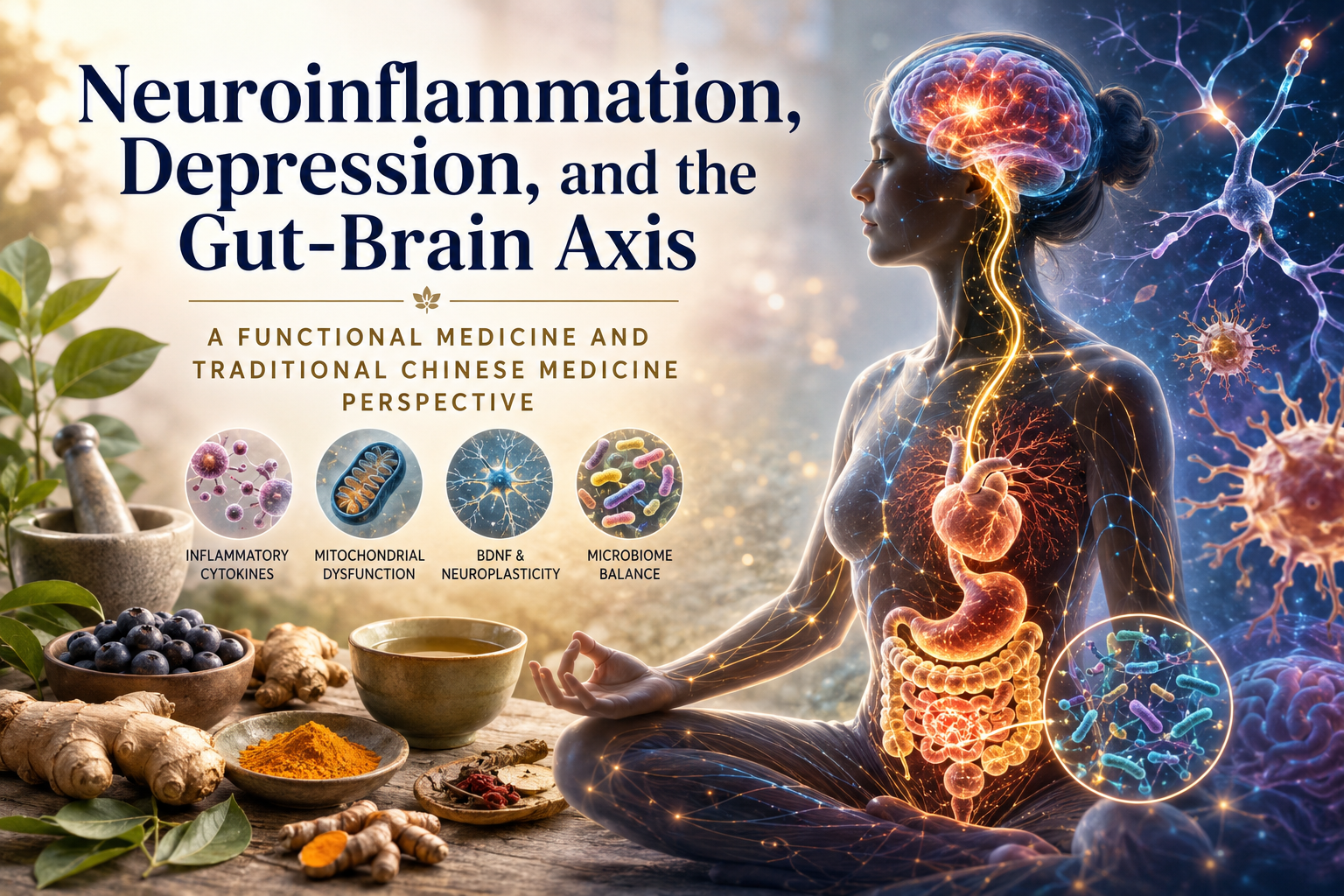
For decades, depression was primarily described as a “chemical imbalance” caused by low serotonin. While neurotransmitters certainly play an important role in mood regulation, modern research has dramatically expanded our understanding of mental health disorders. Scientists now recognize that depression is often connected to chronic inflammation, gut dysfunction, immune activation, mitochondrial stress, hormonal imbalance, poor sleep, toxin exposure, and impaired neuroplasticity.
One of the most important emerging concepts in modern neuroscience is neuroinflammation — inflammation within the brain and nervous system. Increasing evidence suggests that chronic low-grade inflammation may contribute not only to depression and anxiety, but also to brain fog, fatigue, ADHD symptoms, chronic pain, insomnia, and neurodegenerative diseases.
Functional medicine and integrative therapies, including acupuncture, herbal medicine, nutrition, and lifestyle interventions, aim to identify and address the underlying causes driving inflammation in the brain and body.
This article explores the science behind neuroinflammation, the gut-brain axis, and how Functional Medicine and Traditional Chinese Medicine (TCM) may support mood, cognition, resilience, and neurological healing.
Neuroinflammation refers to inflammatory activity within the central nervous system, including the brain and spinal cord.
Acute neuroinflammation can occur after:
However, many individuals experience a more subtle chronic inflammatory state that develops slowly over time.
Common contributors include:
Inflammation in the body communicates with the brain through inflammatory cytokines, immune messengers, vagal nerve signaling, and disruption of the blood-brain barrier.
Over time, this inflammatory signaling may alter:
Research increasingly suggests that depression itself may include an “inflammatory subtype,” particularly in patients with elevated inflammatory markers such as CRP, IL-6, and TNF-alpha.
Inflammation can significantly influence brain chemistry and neurological function.
When inflammatory cytokines remain elevated, they may:
This may contribute to symptoms such as:
Many individuals with neuroinflammation also experience:
This helps explain why depression is often not simply a “mental health problem,” but rather a whole-body inflammatory condition.
Traditional antidepressant models focused heavily on serotonin deficiency. However, many patients continue to struggle despite medication, suggesting additional biological mechanisms are involved.
Modern research indicates that depression may involve:
Chronic inflammation may also alter tryptophan metabolism away from serotonin production and toward inflammatory metabolites such as quinolinic acid, which may contribute to neurotoxicity and mood changes.
Inflammatory cytokines may reduce dopamine signaling, impair motivation, increase fatigue, and worsen cognitive symptoms commonly seen in depression.
This helps explain why many individuals with depression simultaneously experience:
The gut and brain are deeply interconnected through what is known as the gut-brain axis.
This communication network involves:
The gut microbiome influences:
Approximately 70% of the immune system resides within the gut-associated lymphoid tissue (GALT), making intestinal health critically important for inflammatory regulation.
Studies have found that individuals with depression often exhibit:
Certain beneficial bacteria such as Coprococcus and Dialister are frequently reduced in patients with depression.
One major functional medicine concept is:
When the intestinal lining becomes compromised, substances that normally remain inside the digestive tract can enter the bloodstream, including:
This process may increase systemic inflammation and weaken the blood-brain barrier, allowing inflammatory molecules to enter the brain.
Research suggests this may contribute to:
Animal studies have demonstrated that exposure to endotoxins can directly induce behaviors resembling depression, fatigue, and social withdrawal.
One of the most important discoveries in modern neuroscience is the role of Brain-Derived Neurotrophic Factor (BDNF).
BDNF is often described as:
BDNF supports:
Chronic stress and inflammation are associated with reduced BDNF levels.
Low BDNF has been linked to:
Many modern antidepressant therapies appear to improve mood partly because they enhance neuroplasticity and increase BDNF signaling rather than simply boosting serotonin alone.
Neuroplasticity refers to the brain’s ability to adapt, reorganize, and form new neural connections.
Healthy neuroplasticity supports:
However, chronic inflammation, excessive cortisol, toxins, poor sleep, and metabolic dysfunction can impair neuroplasticity.
Supporting brain healing therefore requires more than symptom suppression — it requires creating an internal environment that allows the nervous system to repair and regulate itself.
Traditional Chinese Medicine (TCM) has recognized mind-body connections for thousands of years.
While modern neuroscience uses terms such as:
TCM describes similar patterns through energetic and organ-system imbalances.
Rather than viewing depression, anxiety, fatigue, and brain fog as isolated mental conditions, TCM sees them as manifestations of deeper systemic disharmony involving the Liver, Spleen, Heart, Kidney, and digestive system.
Modern research increasingly suggests that many TCM concepts parallel emerging understandings of inflammation, autonomic dysfunction, gut permeability, microbiome imbalance, and neuroendocrine dysregulation.
One of the most common TCM patterns associated with depression and anxiety is Liver Qi Stagnation.
Symptoms may include:
In TCM, the Liver is responsible for the smooth flow of Qi and emotions throughout the body.
Chronic emotional stress, unresolved trauma, overwork, and frustration can impair this flow, creating stagnation.
From a modern perspective, this pattern closely resembles:
Research now shows chronic stress contributes to:
Another major TCM pattern linked to neuroinflammation is Phlegm-Dampness accumulation.
Symptoms may include:
In TCM, “phlegm” does not only refer to mucus in the lungs. It also describes pathological accumulation that obstructs mental clarity and normal circulation of Qi and Blood.
Ancient TCM texts often describe:
“Phlegm misting the mind.”
This concept may parallel modern findings involving:
Functional medicine similarly recognizes that chronic inflammation, poor detoxification, dysbiosis, and mitochondrial dysfunction may contribute to cognitive symptoms and fatigue.
Heart-Spleen Deficiency is another common pattern seen in patients with chronic stress and emotional exhaustion.
Symptoms may include:
In TCM, the Spleen is responsible for digestion and nutrient transformation, while the Heart houses the “Shen” (mind/spirit).
When digestion weakens over time due to stress, poor diet, overwork, or chronic illness, the body may fail to adequately nourish the nervous system.
This resembles modern understandings of:
Research increasingly supports the relationship between gut dysfunction, nutrient depletion, and mood disorders.
TCM has long emphasized the relationship between digestion and emotional health.
Ancient Chinese medicine states:
“The Spleen and Stomach are the foundation of postnatal life.”
Modern gut-brain axis research strongly supports this principle.
Emerging studies suggest:
Interestingly, newer acupuncture research suggests acupuncture may help regulate:
The brain is one of the most energy-demanding organs in the body.
Mitochondria are responsible for generating ATP, the cellular energy required for proper neurological function.
Inflammation and oxidative stress can impair mitochondrial activity, leading to:
Mitochondrial dysfunction is increasingly recognized in depression and chronic fatigue conditions.
Functional medicine strategies often focus on supporting mitochondrial health through:
Chronic psychological stress strongly contributes to neuroinflammation.
Persistent activation of the HPA axis can lead to:
Over time, the body may become trapped in a chronic “survival state,” characterized by:
This is why nervous system regulation has become a major focus in functional and integrative medicine.
Research increasingly suggests acupuncture may help regulate neuroinflammatory pathways.
Potential mechanisms include:
Studies suggest acupuncture may influence autonomic nervous system balance and reduce sympathetic overactivation commonly associated with chronic stress and inflammation.
Newer research also suggests acupuncture may:
Many integrative clinics combine acupuncture with:
to support recovery from chronic inflammatory conditions.
Diet strongly influences inflammation, mitochondrial function, and microbiome balance.
Brain-supportive foods include:
These foods provide:
Reducing:
may help decrease inflammatory burden.
Sleep is one of the most critical therapies for neuroinflammation recovery.
Poor sleep increases:
Sleep also plays a crucial role in glymphatic drainage — the brain’s “waste clearance” system that helps remove inflammatory byproducts and metabolic waste.
Improving sleep quality may significantly support neurological healing.
Nervous system regulation strategies may help reduce chronic sympathetic overactivation.
Supportive therapies may include:
These approaches may improve:
Environmental toxins may contribute significantly to chronic inflammation.
Potential contributors include:
Functional medicine often focuses on reducing toxic burden while supporting:
Recent studies continue to strengthen the connection between neuroinflammation, the microbiota-gut-brain axis, and depression.
A 2025 review published in Frontiers in Pharmacology highlighted that gut dysbiosis, inflammatory cytokines, and blood-brain barrier dysfunction may significantly contribute to depression and post-stroke depression. The review also discussed how Traditional Chinese Medicine may help regulate immune signaling, gut microbiota, neurotransmitter balance, and neuroinflammation simultaneously.
A 2025 clinical study on acupuncture and post-stroke depression found that acupuncture improved depressive symptoms while increasing serum BDNF and serotonin levels and improving beneficial gut bacteria such as Lactobacillus and Bifidobacterium.
Another 2025 experimental study demonstrated that acupuncture reduced neuroinflammatory pathways involving TLR4/MyD88/NF-κB signaling while restoring gut microbiota balance and lowering inflammatory cytokines such as IL-6 and TNF-α.
Emerging 2026 reviews also suggest acupuncture may regulate glial cell activation, reduce neuroinflammation, support neuroplasticity, and influence the microbiota-gut-brain axis in neurodegenerative and mood-related conditions.
These findings support a growing integrative model of mental health that combines:
Neuroinflammation is rapidly becoming one of the most important concepts in understanding:
The brain does not function independently from the body. It is deeply connected to:
Traditional Chinese Medicine and Functional Medicine both recognize that healing requires more than symptom suppression.
A whole-body approach that supports:
may offer a more comprehensive path toward healing.
Rather than only asking:
“How do we suppress symptoms?”
Modern integrative medicine asks:
Addressing these root causes may help support both mental and physical resilience over the long term.

